When a Horizon Europe project is funded, the Grant Agreement is not signed with “the European Commission” as a single entity. It is signed with a specific executive agency — and that distinction matters more than most coordinators realise when they first enter the programme.
Understanding which agency manages which type of project, what that means in practice, and why this structure exists is the foundation for navigating the institutional landscape of Horizon Europe effectively.
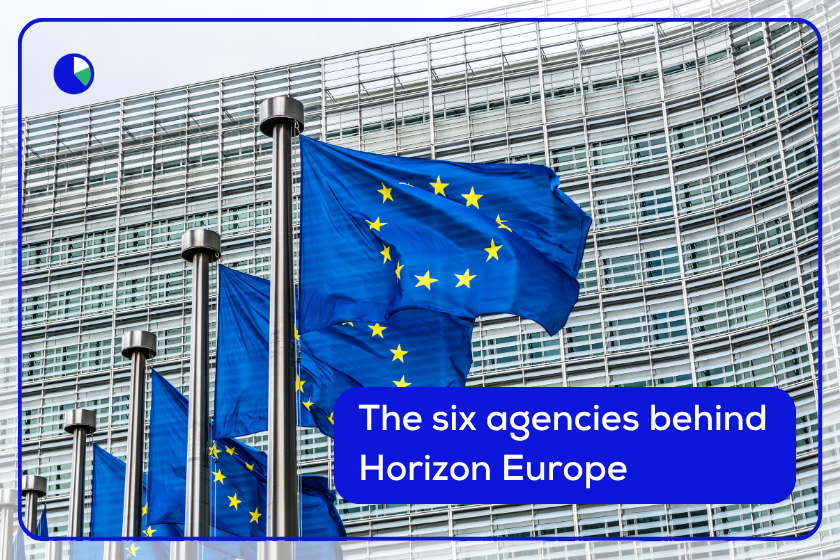
The European Commission does not manage all Horizon Europe projects directly. Most are managed by dedicated executive agencies that act on the Commission’s behalf:
- REA — Research Executive Agency: manages the majority of collaborative research projects under Pillar II
- ERCEA — European Research Council Executive Agency: manages ERC grants
- EISMEA — European Innovation Council and SMEs Executive Agency: manages EIC instruments
- CINEA — European Climate, Infrastructure and Environment Executive Agency: manages projects in climate, energy, and transport
- HaDEA — European Health and Digital Executive Agency: manages health and digital projects
- EACEA — European Education and Culture Executive Agency: manages education and culture programmes
- The agency managing your project is specified in the Grant Agreement. All formal communications — report submissions, amendment requests, audit notifications — pass through your assigned agency, not through the Commission’s central departments.
Why executive agencies exist
The European Commission is a policy and regulatory body. Running the day-to-day administration of thousands of funded projects — reviewing reports, processing amendments, managing payments, coordinating audits — is an operational function that sits alongside, but distinct from, policy-making.
Executive agencies were created to handle exactly this operational function. They act on behalf of the Commission, under its supervision and strategic direction, but with their own management structure, staff, and operational responsibility. They do not set policy — they implement it.
For organisations participating in Horizon Europe, the practical consequence is clear: the agency is your institutional counterpart throughout the project lifecycle. The Commission sets the rules. The agency applies them.
The six agencies managing Horizon Europe
REA — Research Executive Agency
The REA is the largest of the Horizon Europe executive agencies and the most likely counterpart for organisations entering the programme for the first time. Established in 2007, it manages parts of the European Union’s research and innovation programmes, including Horizon Europe, and provides administrative support for EU-funded research project.
In practice, REA manages the majority of collaborative research projects under Pillar II — Research and Innovation Actions (RIAs), Innovation Actions (IAs), and Coordination and Support Actions (CSAs) across most thematic areas. It also manages the Marie Skłodowska-Curie Actions (MSCA) under Pillar I.
If your project falls under a standard Horizon Europe collaborative call and does not relate specifically to climate, energy, transport, health, digital, or EIC instruments, REA is almost certainly your agency.
What REA manages: Collaborative R&I projects across most Pillar II clusters, MSCA, Widening measures, and the European Research Area instruments.
ERCEA — European Research Council Executive Agency
The ERCEA manages exclusively ERC grants — Starting, Consolidator, Advanced, Synergy, Proof of Concept, and the new ERC Plus. It operates with a specific mandate to preserve the scientific independence and bottom-up character of ERC funding, and its processes reflect this: the relationship between a Principal Investigator and ERCEA is distinct from the consortium-based management that characterises REA-managed projects.
For PIs awarded ERC grants, ERCEA is the sole institutional counterpart. Communications, reporting, amendments, and financial oversight all pass through ERCEA, not through REA or any other agency.
What ERCEA manages: All ERC grant types across all scientific domains.
EISMEA — European Innovation Council and SMEs Executive Agency
EISMEA manages the EIC instruments — Pathfinder, Transition, Accelerator, and the new Advanced Innovation Challenges pilot — as well as SME-related programmes and the European innovation ecosystems component of Pillar III.
For startups and SMEs engaging with the EIC, EISMEA is the counterpart for the grant component of their funding. For EIC Accelerator companies that also receive equity investment from the EIC Fund, a separate relationship with the EIC Fund management structure applies alongside the standard EISMEA grant management relationship.
What EISMEA manages: EIC Pathfinder, Transition, Accelerator, Advanced Innovation Challenges, STEP Scale Up, and SME-focused instruments.
CINEA — European Climate, Infrastructure and Environment Executive Agency
CINEA manages Horizon Europe projects in three specific thematic areas: climate, energy, and transport. It also manages three of the five Horizon Europe missions — the Mission on Climate Change Adaptation, the Mission on Oceans and Waters, and the Mission on Soil Health — as well as programmes outside Horizon Europe such as the Connecting Europe Facility and the LIFE programme.
For organisations working in clean energy, sustainable transport, or climate science, CINEA is the most likely agency counterpart. Its sectoral focus means its Project Officers have deep domain expertise in these areas.
What CINEA manages: Horizon Europe clusters on climate, energy, and transport; three Horizon Europe missions; LIFE programme; Connecting Europe Facility.
HaDEA — European Health and Digital Executive Agency
HaDEA manages Horizon Europe projects in two thematic domains: health and digital. This includes the Health cluster under Pillar II, the EU4Health programme, and significant parts of the Digital Europe Programme. It also manages the Mission on Cancer — one of the five Horizon Europe missions.
For organisations in biomedical research, digital infrastructure, artificial intelligence, and health technology, HaDEA is the most relevant agency. Its dual mandate across health and digital reflects the increasing convergence of these domains in EU research and innovation policy.
What HaDEA manages: Horizon Europe health and digital clusters, EU4Health, Digital Europe Programme, Mission on Cancer.
EACEA — European Education and Culture Executive Agency
EACEA’s mandate within Horizon Europe is more limited than the other agencies — it primarily manages education and culture-related programmes. Within the Horizon Europe context, it handles some activities related to research infrastructure and social sciences and humanities that touch on cultural and educational dimensions. Its primary mandate covers the Erasmus+ programme and Creative Europe, which sit outside Horizon Europe.
For most Horizon Europe applicants, EACEA will not be the relevant agency unless the project has a specific cultural, educational, or social sciences dimension that falls within its remit.
What EACEA manages: Selected Horizon Europe activities in social sciences and humanities; Erasmus+; Creative Europe.
How to identify which agency manages your project
The agency is specified in the Grant Agreement. Every GA includes the full legal name and address of the agency signing on behalf of the European Commission — this is the definitive reference.
For applicants at the proposal stage, the call documentation on the Funding and Tenders Portal indicates which agency will manage the resulting projects. In most cases, the thematic area of the call is the clearest indicator: climate, energy, and transport calls go to CINEA; health and digital calls go to HaDEA; EIC calls go to EISMEA; ERC calls go to ERCEA; most others go to REA.
What the agency distinction means in practice
For day-to-day project management, the agency distinction affects three things in particular:
Your Project Officer’s context. Project Officers at CINEA have deep expertise in climate and energy. POs at EISMEA understand startup dynamics and deep tech development. POs at ERCEA are attuned to frontier research. The agency context shapes the expectations and evaluation perspective of the person reviewing your reports.
The processes and timelines. Each agency has its own internal processes for report review, amendment handling, and payment release. Timelines can vary. The support documentation available — guidance notes, FAQs, helpdesk contacts — is agency-specific.
The escalation pathways. If a problem arises — a disputed cost, an amendment that stalls, a payment that is delayed — the escalation pathway runs through the agency, not through the Commission’s central services. Knowing which agency you are dealing with, and how to navigate its specific processes, is a practical operational skill.
How Kronis supports agency-facing compliance
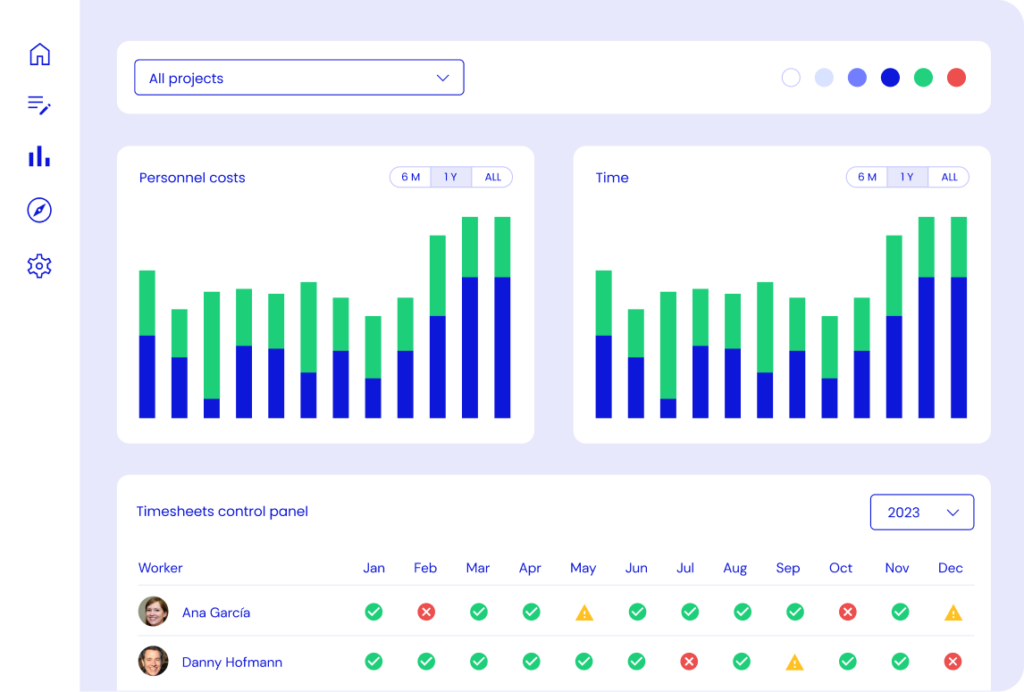
Regardless of which agency manages your project, the compliance obligations are structurally identical: a Grant Agreement to implement, deliverables and milestones to track, financial records to maintain, and reports to submit on time. Kronis PMO and Kronis Finance provide the management infrastructure that applies across all agencies and all action types — structured around your specific Grant Agreement from day one.
Final thoughts
The executive agency structure is not bureaucratic complexity for its own sake. It is a deliberate separation between policy-making and operational implementation — one that allows the Commission to maintain strategic oversight while delegating the day-to-day management of thousands of funded projects to specialised bodies.
For coordinators and finance teams, understanding which agency manages their project — and what that means for their specific reporting relationship — is a practical prerequisite for navigating the programme professionally.


EIC Advanced Innovation Challenges: the EIC’s newest funding instrument explained