Managing the finances of a Horizon Europe project is not a back-office activity. It is a front-line compliance function — one that begins on the first day of the project and carries consequences that extend for years beyond its end.
Every cost claimed must be actually incurred, within the project period, necessary for the project, and verifiable by an auditor. Personnel costs require individual timesheets linked to specific work packages. Expenses must be tracked, categorised, and documented continuously. And all of it must be available, organised, and defensible — not just at reporting time, but for years after the final payment.
Most organisations managing EU-funded projects discover how demanding this is when the first reporting deadline arrives. The documentation is incomplete. The timesheets do not reconcile with actual activity. The cost categories do not match what the Grant Agreement requires. And correcting months of incorrect record-keeping under deadline pressure is significantly more costly than getting it right from the start.
Kronis Finance is built to prevent that problem.
The financial compliance gap in EU projects
The core difficulty is not that the rules are unusually complex. It is that they require a level of documentation discipline that most organisations’ existing systems are not designed to provide.
Standard accounting processes record transactions. EU financial compliance requires more than that — it requires costs to be linked to specific projects, specific work packages, and specific activities, in a way that is traceable, consistent, and accessible at any point during or after the project.
The gap between what a general accounting system provides and what EU financial compliance requires is where most problems originate. Finance teams bridge that gap with spreadsheets, email threads, and manual processes that are fragile, time-consuming, and prone to error — particularly when managing multiple EU grants simultaneously, each with its own reporting deadlines and compliance requirements.
What Kronis Finance does
Kronis Finance provides the financial management infrastructure that EU-funded projects require — structured around the Grant Agreement from day one. It operates across three core functions: planning, reporting, and analysis.
Plan: resource allocation and timesheet management
Kronis Finance starts at the planning stage — before costs are even incurred. It supports resource allocation and project planning, ensuring that the financial structure of the project is correctly set up from the outset.
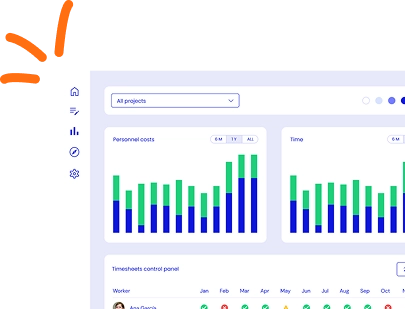
Timesheet management is automated and linked directly to project budgets. Every hour recorded is connected to the relevant project and work package, creating the individual-level documentation that the Grant Agreement requires. Timesheets are maintained continuously — not completed retrospectively at reporting time — which is the single most important factor in producing time records that can withstand scrutiny.
For organisations managing staff allocated across multiple EU projects, Kronis Finance provides the structure to ensure that time is recorded consistently and correctly across the entire portfolio from day one.
Report: compliance-led financial reporting
Financial reporting in Horizon Europe is not simply a matter of submitting numbers. Every figure must be supported by documentation that meets the programme’s eligibility criteria. Kronis Finance structures this process end to end.
Its compliance logic makes eligible costs clear — surfacing the framework that governs what can and cannot be claimed, so that finance teams are working within the right parameters from the moment costs are recorded rather than discovering eligibility problems at reporting time.
Reporting templates are pre-filled with data from the system, reducing the manual effort involved in preparing financial statements and minimising the risk of error in the consolidation process. The system validates data and guides finance teams through reporting deadlines — so that the submission process is a structured, guided activity rather than a last-minute scramble.
For teams managing the record-keeping requirements of EU projects — which extend years beyond project closure — Kronis Finance centralises and automates that process, providing a single secure repository for all project files that is accessible and traceable at any time.
Analyse: real-time financial visibility
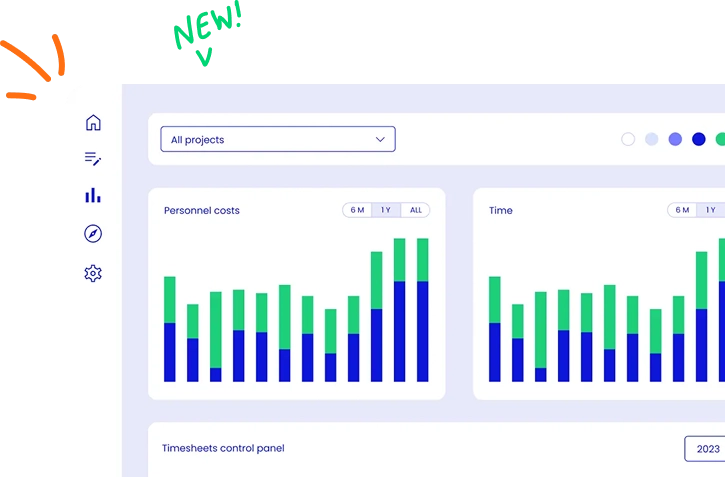
Financial decisions in EU projects cannot wait for the end of a reporting period. Kronis Finance provides real-time visibility into project expenditure — through a dashboard that tracks spending on a project-by-project basis and by individual team member.
This gives finance managers and project coordinators a continuous picture of where the project stands financially — identifying where spending is on track, where it is diverging from the plan, and where action is needed before a problem becomes a reporting issue.
The system detects and flags potential financial problems early — before costs are submitted — keeping spending compliant and giving teams the opportunity to correct course while there is still time to do so.
Compliance and audit readiness
An organisation that closes its EU project today can still be audited years later. The post-project audit window means that financial records must be maintained, organised, and accessible long after the project ends.
Kronis Finance anticipates audit needs from the start — keeping all documents in order and automating compliance checks and reminders so that the team is always ahead of requirements. It centralises record-keeping in a single, secure repository, ensuring that nothing is forgotten at project closure and that files remain secure and accessible for the full retention period.
The approach is proactive rather than reactive: rather than preparing for an audit when it is announced, Kronis Finance builds the audit-ready documentation as a natural output of how the project’s finances are managed day to day.
Who Kronis Finance is for
The primary users of Kronis Finance are the finance managers, financial controllers, and compliance officers responsible for the financial management of EU-funded R&D projects. It is also used by organisations managing multiple EU grants simultaneously, where consistent methodology and cross-portfolio visibility are the primary concerns.
Kronis Finance works alongside Kronis PMO — the operational execution layer of the Kronis ecosystem. Where Kronis PMO answers the question “are we doing the work correctly?”, Kronis Finance answers “are we spending and reporting correctly?” Together, they cover the full lifecycle of EU project management: from Grant Agreement signature to final payment and beyond.
Final thoughts
Financial compliance in Horizon Europe is not a reporting task. It is a management discipline that must be embedded in how costs are recorded, tracked, and documented from the first day of the project.
The organisations that manage it well are not those with the most experienced finance teams alone — they are those with the right systems, applied consistently, from day one. Kronis Finance provides that system: automating the repetitive, structuring the complex, and keeping the entire financial lifecycle of an EU project visible, coordinated, and compliant.
If you want to see how Kronis Finance works in practice, request a demo.


Kronis PMO in practice: how a coordinator runs a 12-partner Horizon Europe project