Why Project Costs Get Rejected in Horizon Europe

Table of Contents

project costs rejected

Introduction

In EU-funded projects, receiving funding is only part of the challenge. The real responsibility lies in demonstrating that every declared cost complies with the financial rules of the Grant Agreement.

Under the Horizon Europe Model Grant Agreement (MGA), the granting authority has the right to reject project costs that do not meet the eligibility requirements.

This mechanism is defined in Article 27 – Rejection of Costs of the Horizon Europe Grant Agreement.

For any manager in EU-funded projects, understanding why costs are rejected is essential to protect the organisation from financial corrections, reduced funding, and audit risks.


The Most Common Reasons Costs Are Rejected

1. Costs That Do Not Meet Eligibility Conditions

For a cost to be eligible under Horizon Europe, it must: 

  • be actually incurred by the beneficiary 
  • be incurred during the action duration 
  • be necessary for the implementation of the project 
  • be recorded in the beneficiary’s accounts 
  • comply with national accounting and tax rules 
  • respect the principles of sound financial management 

If one of these conditions is not met, the cost may be rejected. 

2. Insufficient Supporting Documentation

EU project costs must be verifiable through documentation. 

Typical supporting evidence includes: 

  • invoices 
  • accounting records 
  • employment contracts 
  • procurement documentation 
  • timesheets 

If documentation is missing or incomplete, auditors may conclude that the cost cannot be verified, which can lead to rejection.

3. Errors in Personnel Cost Calculations

Personnel costs usually represent the largest share of EU project budgets. 

However, they are also one of the most common sources of financial corrections. 

Typical problems include: 

  • incorrect calculation of daily rates 
  • unreliable or missing timesheets 
  • personnel not properly assigned to the project 
  • inconsistencies between accounting records and reported costs 

Because personnel costs are high-value items, even small errors can lead to significant financial corrections. 

4. Non-Compliant Procurement or Subcontracting

When project activities involve subcontracting or external purchases, beneficiaries must respect procurement principles such as: 

  • best value for money 
  • transparency 
  • absence of conflict of interest 

If procurement procedures are poorly documented or non-compliant, the related costs may be rejected during a review or audit. 

The Financial Impact of Cost Rejection

Cost rejection does not only affect a single expense. 

Depending on the situation, it may lead to: 

  • reduced EU reimbursement 
  • financial corrections during audits 
  • repayment of funds already received 

For organisations managing several EU-funded projects, repeated issues may also increase the likelihood of further financial scrutiny. 

This is why finance teams must treat cost eligibility in EU-funded projects as a continuous control process, not just a reporting exercise. 

How Teams Can Reduce the Risk of Cost Rejection

Preventing cost rejection requires strong financial governance throughout the project lifecycle. 

Key practices include: 

Establish clear eligibility controls

Finance teams should ensure that project expenses are reviewed against eligibility rules before they are declared in financial reports.

Maintain traceable financial records

All project costs should be: 

  • identifiable in the accounting system 
  • linked to project activities 
  • supported by complete documentation 

This ensures that every declared cost can be traced back to verifiable financial evidence. 

Structure procurement documentation

All subcontracting and purchasing decisions should be supported by clear documentation demonstrating compliance with procurement principles and internal procedures.

Why Structured Financial Systems Reduce Risk

Many organisations still manage EU project finances through spreadsheets, emails and dispersed documentation. This makes it difficult to ensure consistent eligibility checks, traceable financial records and structured audit trails — especially in projects with complex personnel costs, procurement procedures and reporting requirements.

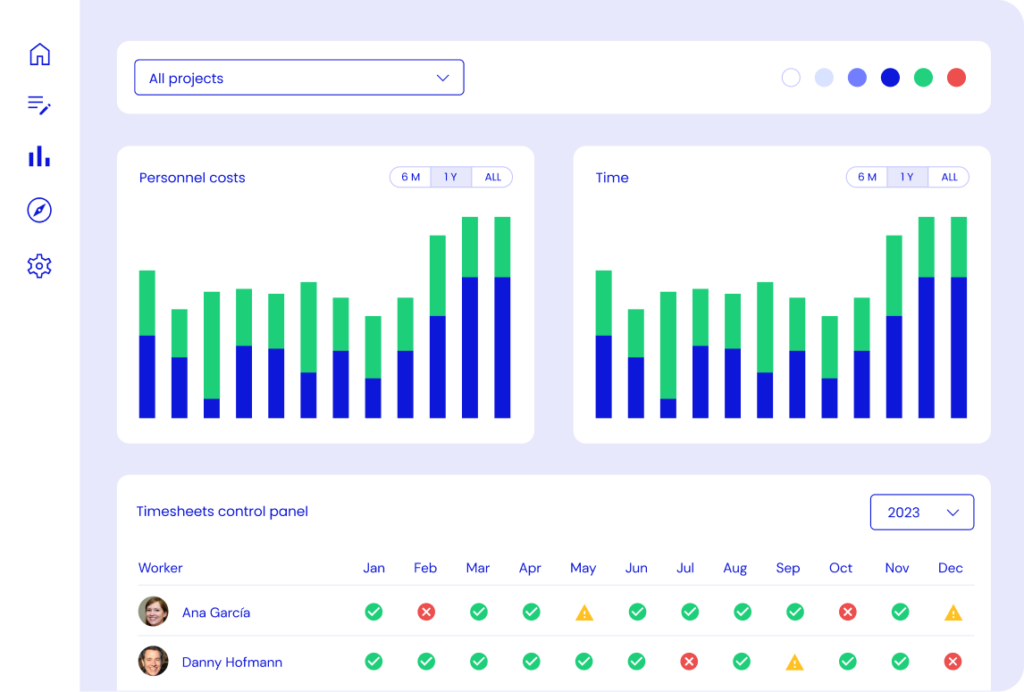
Using structured digital tools for EU project financial management can significantly reduce these risks. Platforms such as Kronis help organisations centralise financial data, organise supporting documentation and maintain traceable records linked to project budgets and personnel costs, making it easier for finance teams to keep projects audit-ready throughout their lifecycle.

Final Thoughts

Article 27 of the Horizon Europe Grant Agreement allows the granting authority to reject costs that do not comply with eligibility rules. For organisations managing EU-funded projects, this makes financial governance and documentation control essential. By ensuring that project costs are eligible, traceable and properly documented, finance teams can significantly reduce the risk of Horizon Europe cost rejection and financial corrections. 

This is what many coordinators call the “domino effect.” Financial simplicity does not eliminate dependency risk. It shifts it to execution and coordination.

Kronis Software: The Solution to Navigating EU Funding Complexities

Scroll to Top
Privacy Overview

This website uses cookies so that we can provide you with the best user experience possible. Cookie information is stored in your browser and performs functions such as recognising you when you return to our website and helping our team to understand which sections of the website you find most interesting and useful.