
Introduction
For organisations managing EU-funded projects, financial compliance does not end with reporting. Under the Horizon Europe Model Grant Agreement (MGA), the granting authority (the European Commission or its Executive Agencies) retains the right to verify how funds were used — during the project and years after it ends.
These verification mechanisms are defined in Article 25: Checks, Reviews, Audits and Investigations — Extension of Findings of the Horizon Europe Grant Agreement.
For CFOs and finance managers responsible for EU-funded projects, understanding Article 25 is essential to ensure audit readiness, financial traceability, and risk control.
Your solution for navigating grants
With Kronis Finance, we make the process simple.
Book a free demo with us nowWhy Article 25 Matters for Financial Governance
EU grants operate under strict financial accountability rules. Beneficiaries receive funding to implement a project, but they remain fully responsible for demonstrating that funds were used correctly and that declared costs comply with the Horizon Europe Grant Agreement.
Article 25 gives the granting authority the right to carry out several types of verification:
- administrative check
- project reviews
- financial audits
- investigations in cases of suspected irregularities
These mechanisms ensure that the grant is implemented according to the Grant Agreement and that eligible costs are properly justified and documented.
For finance departments, this means that financial management systems for EU-funded projects must be designed with auditability in mind from the start.
The Four Types of Controls
Article 25 establishes four main verification mechanisms that may apply to Horizon Europe projects and other EU-funded grants.
1. Checks
Checks are administrative verifications performed by the granting authority to confirm that the project complies with the Grant Agreement.
They may examine:
- financial records
- supporting documentation
- eligibility of declared costs
- compliance with contractual obligations
Checks can occur at any time during the project implementation and typically focus on documentation submitted in technical and financial reports.
2. Project Reviews
Reviews assess the implementation of the action and whether the project is progressing according to the Grant Agreement and the agreed work plan.
These reviews may evaluate:
- technical progress
- achievement of deliverables and milestone
- use of project resources
- consistency between activities and reported costs
Reviews often occur during reporting periods or before key payments are released.
While reviews are not purely financial, they can lead to financial corrections if inconsistencies are identified.
3. Financial Audits
Audits are the most detailed form of financial verification under the Horizon Europe Grant Agreement.
During an audit, the granting authority may examine:
- accounting records
- personnel cost calculations
- timesheets
- procurement procedures
- subcontracting documentation
- invoices and supporting evidence
The purpose is to confirm that declared costs meet the eligibility requirements defined in the Grant Agreement.
Importantly, audits can take place during the project and up to two years after the final payment of the grant, meaning organisations must maintain complete records long after project closure.
4. Investigations
In cases where fraud, irregularities or serious misconduct are suspected, EU institutions may initiate formal investigations.
These investigations may involve bodies such as:
- OLAF (European Anti-Fraud Office)
- the European Public Prosecutor’s Office (EPPO)
While rare, these investigations highlight the importance of maintaining transparent and compliant financial management systems in EU-funded projects.
When Can Horizon Europe Projects Be Audited?
Under Article 25 of the Horizon Europe Grant Agreement, verification activities may occur at several stages:
- During the project implementation, through checks and reviews
- At the time of reporting and payments, when the granting authority verifies reported costs
- After the project ends, through financial audits
According to the Model Grant Agreement, audits may take place up to 5 years after the final payment of the grant.
This means organisations must ensure that all financial documentation remains accessible, complete and traceable even after project closure.
What Financial Managers Should Implement
Finance managers responsible for EU-funded projects should ensure that internal processes support audit readiness throughout the project lifecycle.
Key practices include:
Maintain full financial traceability
All project costs must be:
- identifiable
- verifiable
- recorded in the organisation’s accounting system.
Ensure reliable time tracking for personnel costs
Personnel costs are usually the largest cost category in EU-funded projects. This requires:
- documented timesheets
- traceable daily rates
- clear assignment of personnel to project tasks
Reliable time tracking is critical for demonstrating the eligibility of personnel costs during Horizon Europe audits.
Structure procurement and subcontracting documentation
Finance teams must maintain documentation demonstrating:
- best value for money
- absence of conflict of interest
- clear contractual terms
Proper documentation helps ensure compliance with EU procurement and financial rules.
Maintain long-term record keeping
Because audits can occur years after project completion, organisations must ensure that documentation remains accessible and structured over time.
Typical records include:
- financial statements
- accounting records
- personnel records
- procurement documentation
- supporting invoices
Why Digital Control Systems Are Becoming Essential
Many organisations still manage EU-funded projects using spreadsheets, emails and dispersed file storage.
This approach increases the risk of:
- missing documentation
- inconsistent cost validation
- incomplete audit trails
A more robust approach is to implement a structured digital system for EU grant financial management and Horizon Europe compliance.
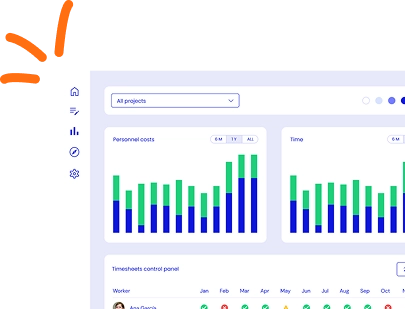
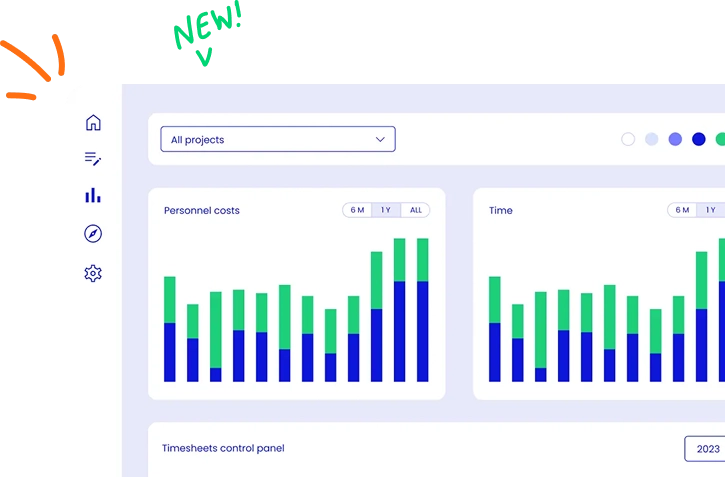
Platforms such as Kronis help organisations maintain control by:
- centralising project financial data
- structuring documentation and records
- linking personnel time tracking to project budgets
- maintaining traceable audit-ready documentation
This allows finance teams to ensure compliance continuously rather than preparing documentation only when audits occur.
Kronis product
Keep project finances, timesheets and audits under control and compliant.
Final Thoughts
Article 25 of the Horizon Europe Grant Agreement ensures that EU funds can be verified through checks, reviews and audits. For organisations managing EU-funded projects, this means financial management must be structured, traceable and audit-ready from the start to minimise the risk of corrections or compliance issues.

From grant searching to managing it: see Kronis at Startup Olé 2026
Horizon Europe vs cascade funding: which route is right for your organisation?