Horizon Europe is not managed by a single European Commission contact. Six executive agencies — REA, ERCEA, EISMEA, CINEA, HaDEA and EACEA — each manage a specific part of the programme. This guide explains who does what.
Behind every Horizon Europe project, the European Commission assigns a Project Officer, a Financial Officer, and a Legal Officer. This guide explains what each one does, when they appear, and how to work with them effectively.
The EIC Advanced Innovation Challenges is the EIC's newest funding instrument — a two-stage pilot designed to accelerate deep tech innovations where the science is ready but commercial uptake is missing.
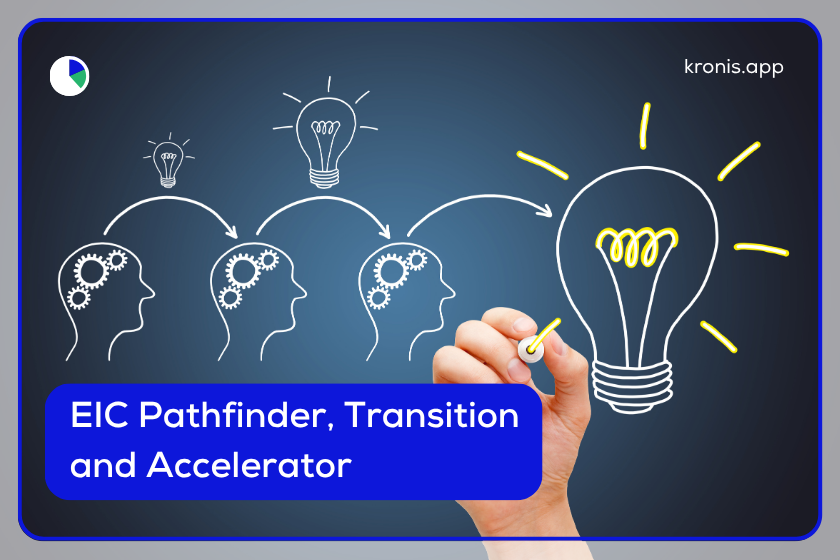
The EIC funds Europe's most ambitious deep tech innovators through three instruments — Pathfinder, Transition, and Accelerator. This guide explains what each one does, who it is for, and how they form a pipeline from lab to market.
RIA, IA, and CSA are the three main types of Horizon Europe actions — and they are not interchangeable. This guide explains what each one funds, who it is for, and how to choose the right one.
TRL — Technology Readiness Level — appears throughout Horizon Europe calls and shapes how proposals are written and evaluated. This guide explains what each level means and how to use the scale correctly.